Rating: 4.5/5
Read: January 2024
Published: September 2019
Author background: Bregman is a Dutch historian; he is 35 years old and has a master's degree in history. He writes about history, philosophy, and economics.

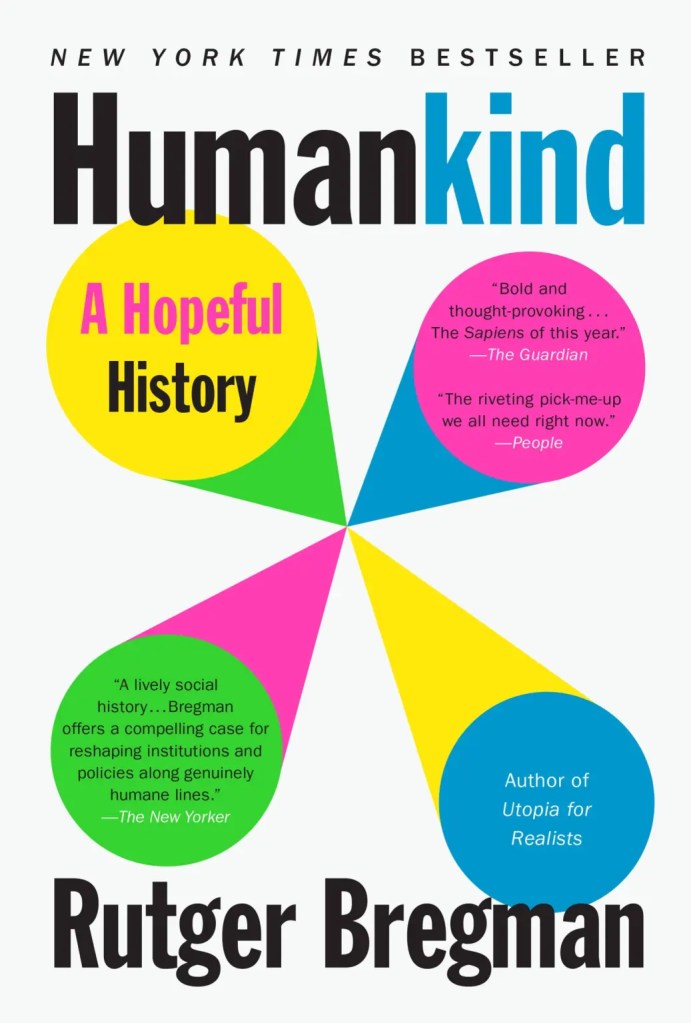
I thoroughly enjoyed this book. However, I went into it biased. I already believe that people are inherently good, and that we have many more redeeming qualities than we do damning ones.

I enjoyed the history of this book. It was written well, and it was approachable. Many books in this vein are extremely technical. Maybe it's because Bregman is a historian and is not inundated with lots of clinical language.

Lots of people will not like this book. It presents some very compelling evidence about the age-old philosophical question related to humanity's moral default setting and does not shy away from the worst examples of humanity, and how even those situations stem from humans wanting to be cooperative. It discusses how people in power putting up barriers to prevent the masses' natural compassion from kicking in and destroying any chance of their agendas being met. It is not a particularly flattering view of humanity at times; it outright says that in every category except social learning, we are inferior to several other animals. As John Green would probably say, social learning helps us live, but it also does lots of other things.

One of the most interesting points in this book is from the epilogue. On page 392, he writes, "Cynicism is just another word for laziness. It's an excuse not to take responsibility. Because if you believe most people are rotten, you don't need to get worked up about injustice. The world is going to hell either way." I don't know if you've ever had an experience where something was rubbing you the wrong way vaguely for several years, decades, even, and then someone puts it into words, and you somehow are able to vocalize "!!!!!!!!!!!" even though that statement is not technically something that you can speak. But in that moment, you are able to speak it, because your reaction is so guttural that your soul is able to accomplish what your frontal lobe is not.

Although I read this book a year ago, and I'm just now finishing this post (hi, yes, it's January 11th, 2025 now, and please don't talk to me about putting projects down and forgetting about them until an automatic deduction makes me determined to get my goddamn money's worth), I'm still happy to have read this book. I still think about it often, now more than ever, as we head into another god forsaken Trump presidency.

 The Counselor Reads